Jebel um Ishrin, at 1,753 meters, is Jordan's third highest peak and forms the massive eastern wall of the main Wadi Rum valley. Known as the "Seven Pillars of Wisdom" after T.E. Lawrence's famous book, this imposing massif offers some of the most adventurous and challenging climbing in Wadi Rum. The classic Crazy Ibex route (Bedan Majnoun) follows ancient ibex tracks to the summit in an authentic Bedouin-style climb.
The Seven Pillars
The name "Seven Pillars of Wisdom" refers to the dramatic series of buttresses and towers that form the western face of Jebel um Ishrin. These massive rock formations dominate the view as you drive through the main valley, creating one of Wadi Rum's most iconic vistas. T.E. Lawrence immortalized them in his book, though historians debate whether he was referring specifically to this mountain or using it as a symbolic title.
Regardless of the historical debate, standing at the base of these towering pillars, you understand why they inspired such legendary writing. The scale is overwhelming-vertical walls rising 500+ meters from the desert floor, carved into distinct towers and buttresses by millions of years of erosion.
The Classic Route: Crazy Ibex (Bedan Majnoun)
Route Overview
- • Grade: Grade 3-5 with 3 technical pitches
- • Time: 6-8 hours round trip
- • Elevation: 1,753m (Jordan's 3rd highest peak)
- • Character: Bedouin-style route following ibex tracks with bolted belays and threads
The Crazy Ibex Route (Bedan Majnoun)
The classic route to the summit of Jebel um Ishrin is the Crazy Ibex route (Bedan Majnoun in Arabic, meaning "they are crazy, these ibex"). This authentic Bedouin-style climb follows ancient ibex tracks and takes you through some of Wadi Rum's most spectacular terrain:
- 1. Wadi Um Ishrin Canyon (Assaoud):
The route begins in the canyon. After about 30 minutes of hiking, you'll take the second canyon on the left, climbing a 30-meter chimney. The route then winds through fascinating "mushroom rock" formations with moderate scrambling (Grade 3).
- 2. Following Ibex Tracks:
The route naturally follows the paths that ibex use to navigate the mountain. You'll see their tracks and understand why the Bedouin named this route after these incredible climbers.
- 3. The Technical Pitches:
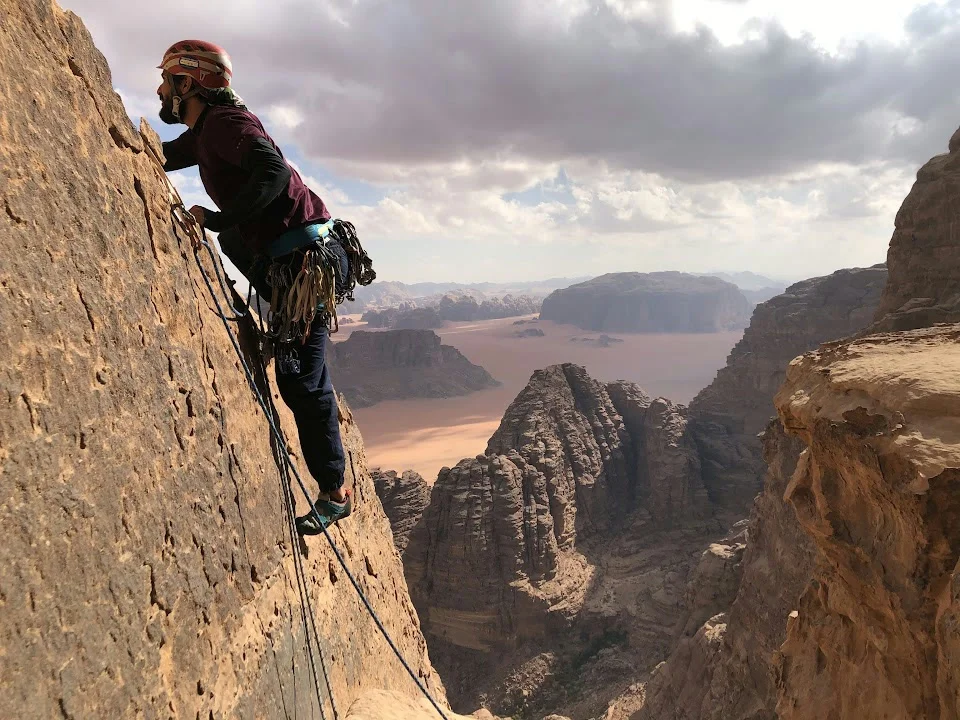
Three main technical pitches on slabs: Grade 3 slab (~35m to bolted belay), Grade 5 slab (~25m with threads and pitons), and a short exposed traverse (~10m) with an updated thread added in 2020. These sections feature what appear to be hand-carved holds from ancient Bedouin hunters.
- 4. Route-Finding Through Domes:
After the technical sections, you'll put the rope away and enjoy route-finding through scenic domes and canyons. The route crosses the canyon at its western end where it's shallow, then heads south through a gully. Cairns mark the way.
- 5. Summit:
The summit at 1,753m offers spectacular views of the Seven Pillars of Wisdom at the base and across the entire Wadi Rum protected area. Just 1 meter lower than Jabal Rum!
Multi-Day Option: Due to the length and difficulty of this climb, many groups choose to make it a multi-day trek. We can camp at the base, climb to the summit, and camp on the plateau before descending the next day. This allows for a more relaxed pace and the incredible experience of sunset and sunrise from the summit area.
What Makes Um Ishrin Special
The Scale
At 1,753m, Jebel um Ishrin is only 1 meter shorter than Jebel Rum, making it Jordan's third highest peak. But what really sets it apart is the dramatic vertical relief-the east face rises nearly 700 meters from the valley floor in a single sweep. This creates some of the most impressive walls in Wadi Rum.
The Views
From the summit of Jebel um Ishrin, you have a unique perspective on Wadi Rum:
- • Jebel Rum's entire west face directly across the valley
- • The main Wadi Rum valley stretching north to south
- • Countless other peaks and formations in all directions
- • The vast desert plains extending to Saudi Arabia
- • Wadi Rum village appearing tiny far below
The Challenge
This is one of the most challenging standard routes in Wadi Rum. It requires:
- • Excellent physical fitness and endurance
- • Solid scrambling and basic climbing skills
- • Comfort with significant exposure
- • Good route-finding abilities (with guide support)
- • Mental stamina for a long, committing climb
Petroglyphs and History
The Um Ejil canyon and surrounding areas contain numerous petroglyphs-ancient rock carvings left by Nabataean and earlier peoples. As we climb, I'll point out these historical treasures. They include:
- • Nabataean inscriptions and text
- • Animal carvings (ibex, camels, horses)
- • Human figures and hunting scenes
- • Thamudic script from pre-Islamic times
These carvings remind us that people have been traveling through these canyons for thousands of years. We're following in very ancient footsteps.
The Multi-Day Experience
I highly recommend doing Jebel um Ishrin as a multi-day adventure. Here's a typical itinerary:
Day 1: Approach and Base Camp
- • Drive to the base of the mountain
- • Hike into Um Ejil canyon
- • Set up camp at a scenic spot in or near the canyon
- • Traditional Bedouin dinner and stories under the stars
Day 2: Summit Day
- • Early start (sunrise from camp is spectacular)
- • Climb through the canyon and up to the summit
- • Option to camp on summit plateau or descend to base camp
- • Sunset from the summit is unforgettable
Day 3: Descent and Return
- • Sunrise from summit (if camping on top)
- • Careful descent back through the route
- • Return to vehicles and drive back to village
Conquer the Seven Pillars
Jebel um Ishrin is the ultimate Wadi Rum adventure-challenging, spectacular, and deeply rewarding. This is a serious mountain that demands respect, but with proper preparation and an experienced guide, it's an achievable goal that will give you stories for a lifetime.
Plan Your Um Ishrin AdventureBest Season
Optimal Months: October through April. This long climb requires cool temperatures. Summer is not recommended due to extreme heat and the length of the climb.
Spring (March-April): Wildflowers may bloom in the canyons after winter rains, adding extra beauty to the approach.
Jebel um Ishrin represents everything that makes Wadi Rum special-dramatic landscapes, challenging climbing, ancient history, and the sense of true adventure. It's not the easiest climb, but for those ready for the challenge, it's absolutely unforgettable.
Route information and historical details sourced from "Treks and Climbs in Wadi Rum, Jordan" by Tony Howard, used with permission.

💬 Join the Discussion
Share your thoughts, experiences, or questions about this article